Thursday 26th March 2026
It was a cold but sunny morning as I made my way through the West entrance to York Minster this morning.
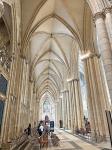
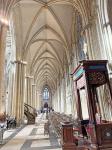
The Minster was a hive of activity as I made my way along the North Nave, groups of tourists and visitors alike were stood around eagerly listening to their tour guides as they enthusiastically explained many of the fascinating features of the minster to them. One of these days I will have to join one of the tour groups.
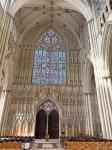
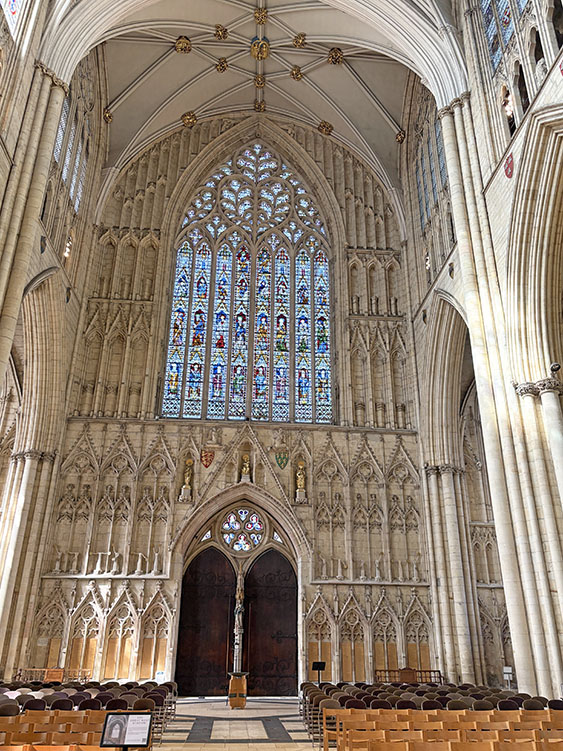
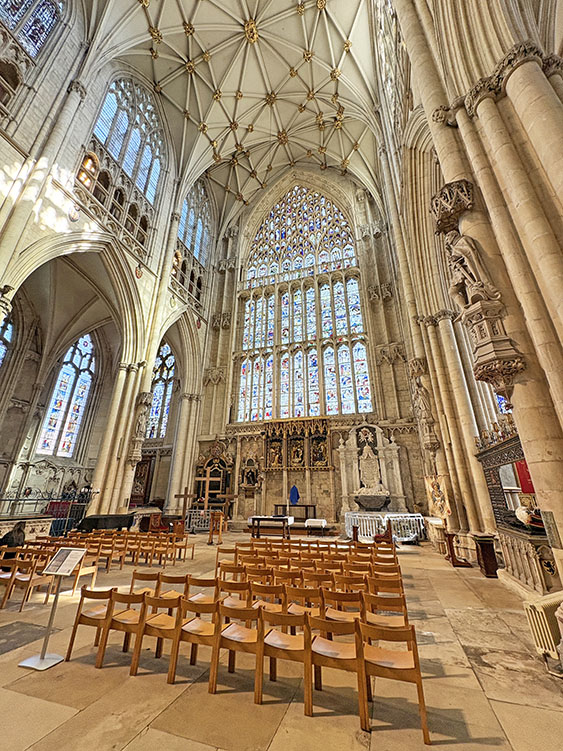
Looking back at the huge west door it is the window that really attracts your attention, often called ‘the Heart of Yorkshire’ which was originally commissioned in 1339. Above the Semaphore Saints are three beautiful, gold-plated sculptures which caught my attention, set in individual recesses above the Great West Door. I continued my walk along the nave to the ‘Central Tower’, there is so much to see here though part of it is temporarily fenced off whilst work is being carried out to improve access to the Quire.
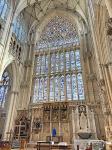
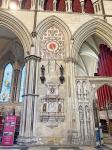
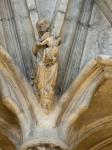
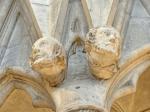
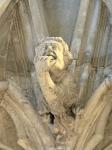
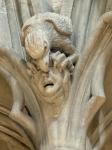
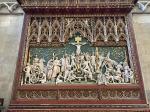
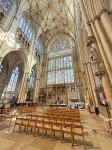
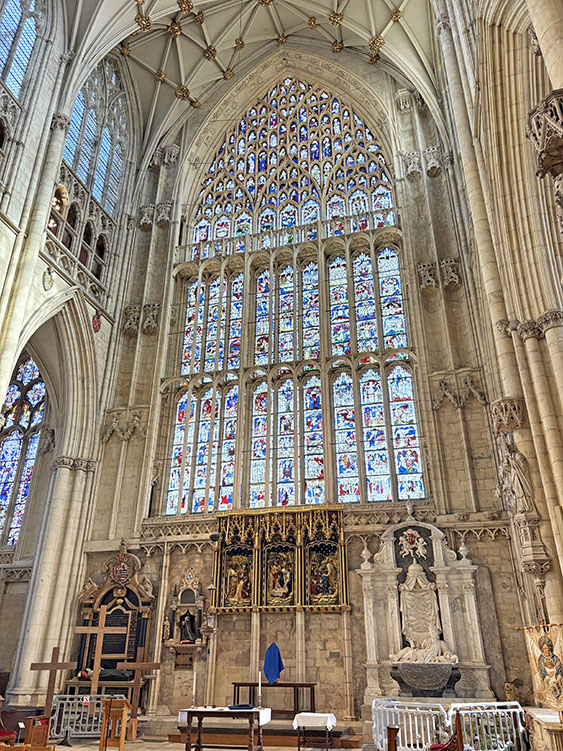
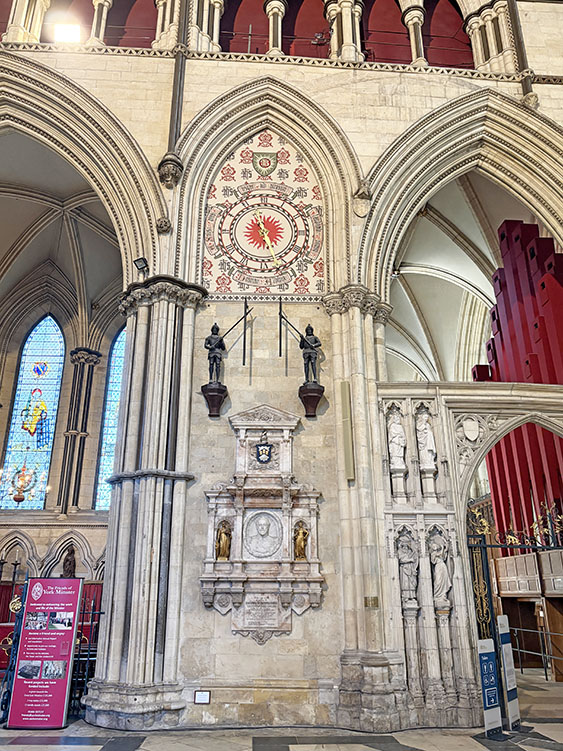
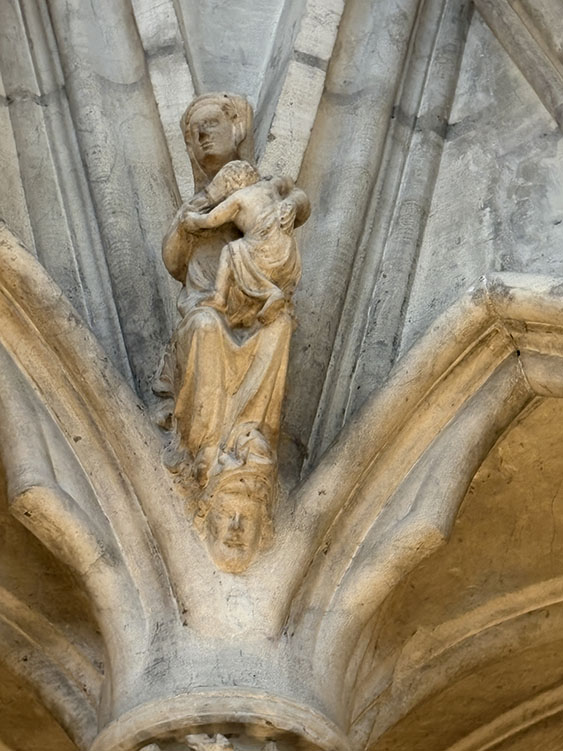
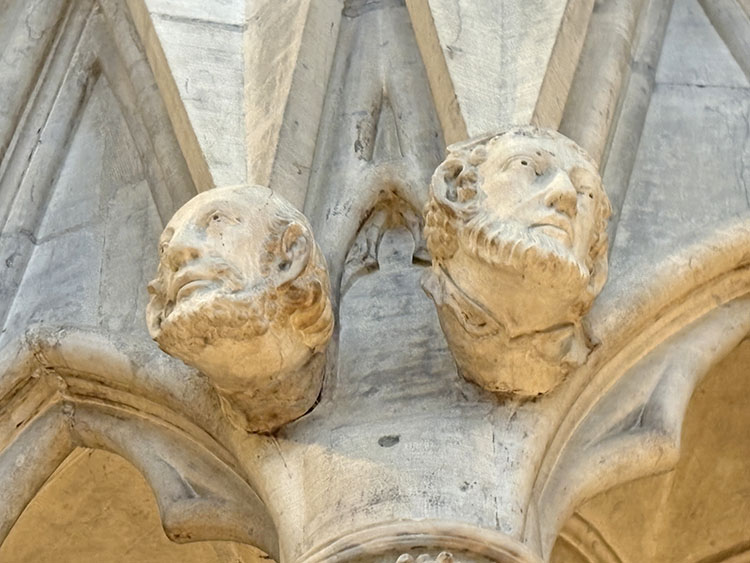
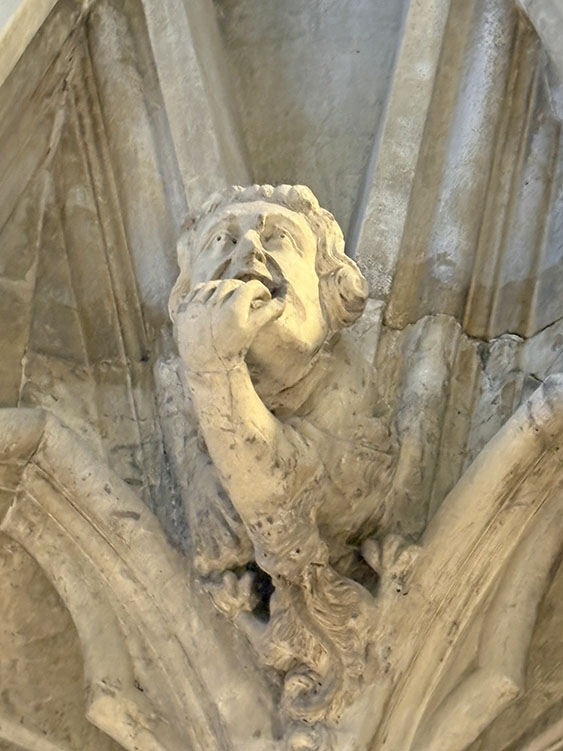
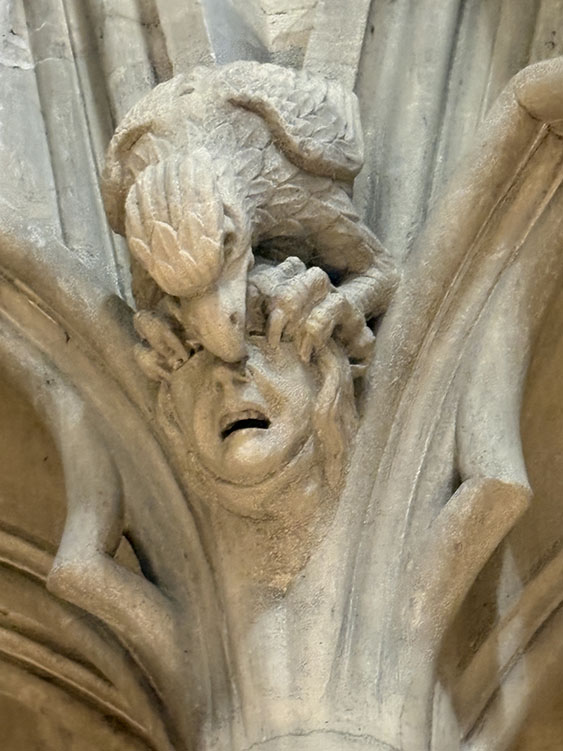
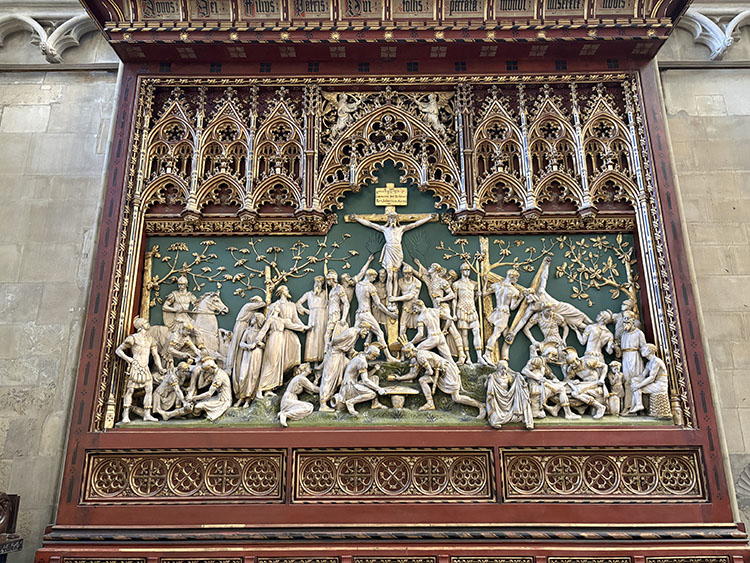
The Five Sisters Window on the North wall always appears darker than the other windows, due in part to repair work carried out over 750 years ago! Heading past the Astronomical clock I continued my walk into the Chapter House. The beautiful ceiling always fascinates me. It was built as an assembly room for the Chapter to run its day-to-day business, and meetings of the College of Canons which still occasionally take place here. It is the walls though that took my attention today, containing some of the Minsters most popular and comical carvings, if not pointed out many visitors wouldn’t see them due to their small size as well as being blinded by the beautiful ceiling and floor tiles. These tiny sculptures include a jester and several characters pulling faces, a mouse, cats, and dogs, birds of prey, a talkative woman with her mouth tied up, a man having his tongue bittern by lizards and many more. Leaving the tiny sculptures, I headed back into the North Transept and popped into St John’s Chapel, this memorial chapel was dedicated in 1926 as a regimental memorial chapel for the Kings Own Yorkshire Light Infantry. After leaving St John’s Chapel I continued my walk along the North Quire to St Stephen’s Chapel, adjacent to the Lady Chapel, to have a look at the Crucifixion scene. This terracotta panel is called “The First Hour of the Crucifixion" by the young ceramic artist George Tinworth. The relief shows early afternoon on Good Friday while the other two crosses are just being erected. Continuing into the Lady Chapel I sat for a few moments to admire the huge Great East Window, created in 1405-8 by Master Glazier John Thornton. Next to the Lady Chapel on the right is All Saint’s Memorial Chapel where Tobias Matthews the Archbishop of York (1546-1628) lies. Passing the protective screens around the South Transept I popped into the Quire. I could stop here all day just admiring all the intricate carving and woodwork. It was originally completed in 1420 but unfortunately destroyed in a fire in 1829 and subsequently rebuilt. It was after this fire that the Minster Constabulary was re established to prevent any further criminal acts in the minster, and it still operates today. Leaving the Quire I stopped to have a look at the ‘Great Processional Banner’, which is a beautiful hand embroidered piece that showcases the Minsters rich history and craftsmanship. Designed by Sir Walter Tapper around the time of the First World War and restored in 1983, it escaped the fire in 1984. Unbeknown by many is that inside the lining is a list of all those who worked on the original banner and a secondary list of those who restored it.
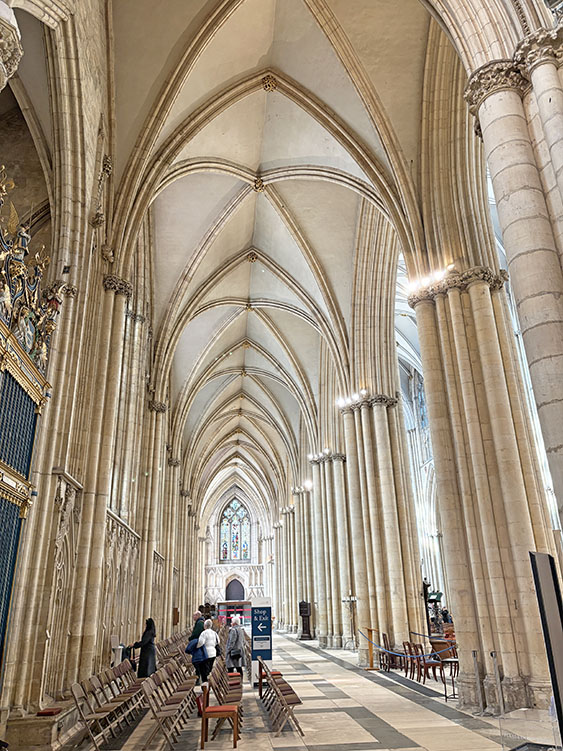
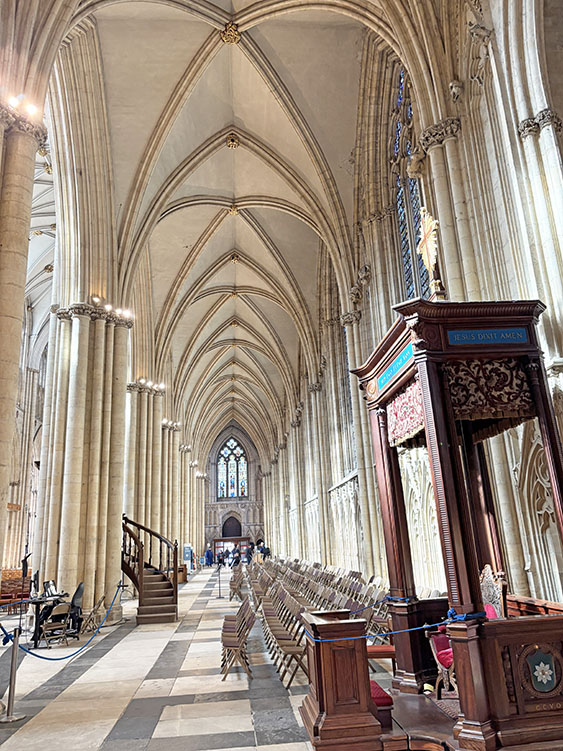
I always like the views looking along the North and South Quire Aisles, although much of the South Aisle is fenced off at the moment due to the restoration work of the St Cuthbert’s and Rose windows. There are some remarkable memorials to some fine and distinguished people. Along the North Aisle lies the bodies of Prince William of Hatfield, the son of Edward 111 and younger brother of the Black Prince, he actually died as a baby, but the memorial shows him as a young child. A little further along lay Sir William Ingram and his wife Catherine, Sir William was a British journalist and Liberal politician from 1874 – 1880. Along the South Aisle lay memorials to the many soldiers who lost their lives during armed conflicts around the world.
|